
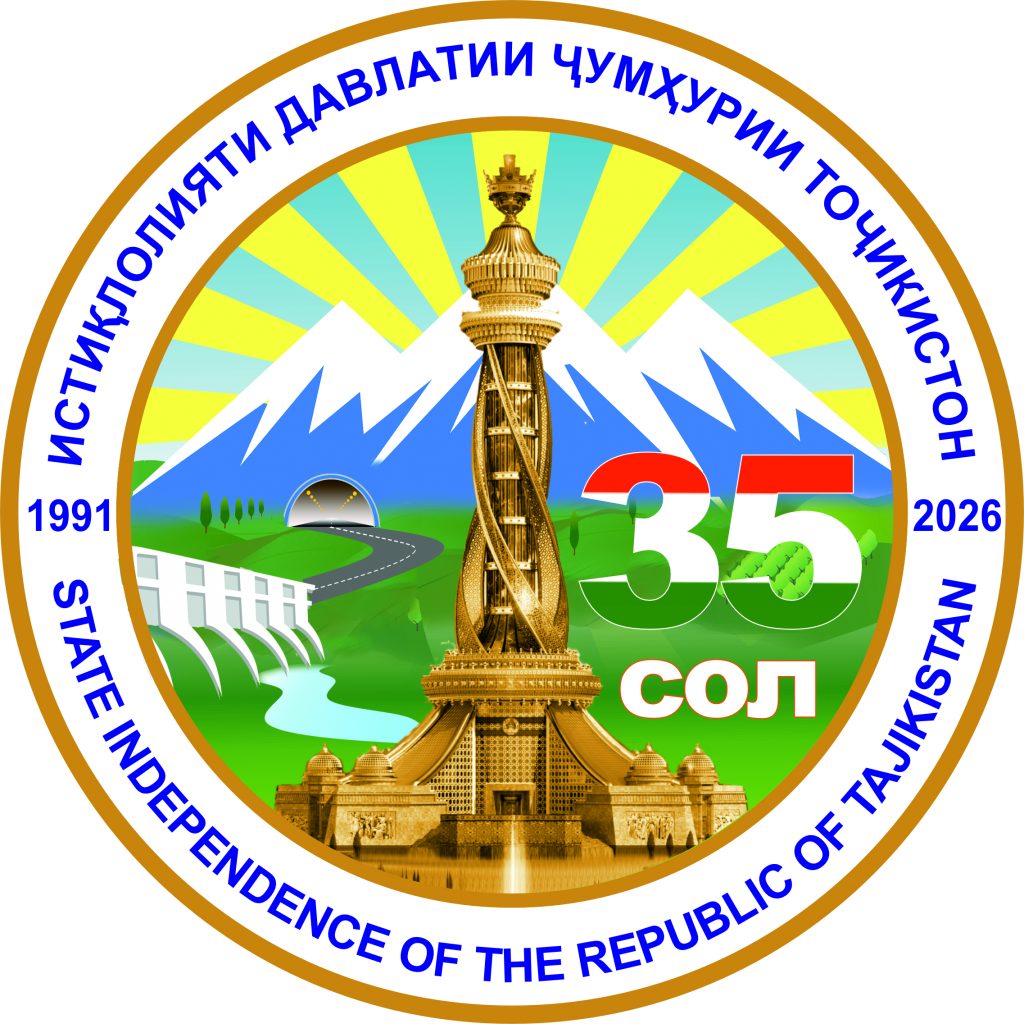
Thirty-five years of the state independence of the Republic of Tajikistan represent a remarkable historical epoch, inseparably connected with the name and statesmanship of the Founder of Peace and National Unity, the Leader of the Nation, the President of the Republic of Tajikistan, His Excellency Emomali Rahmon. During these decades, his political vision, tireless efforts, strategic initiatives, and unwavering commitment to the welfare of the Tajik people have profoundly shaped the country’s modern development. Under his leadership, Tajikistan has not merely preserved its independence, it has established the institutional, economic, social, cultural, and intellectual foundations of a modern sovereign state.
The historical significance of the Leader of the Nation His Excellency Emomali Rahmon’s leadership becomes especially clear when viewed against the circumstances in which he assumed responsibility for the country. At the beginning of the 1990s, Tajikistan faced an unprecedented combination of political instability, economic collapse, social disintegration, and armed confrontation. The young republic was confronted with the danger of losing the very foundations of statehood. In such circumstances, the task before the national leadership was not simply to govern but to safeguard the historical future of the country.
The Leader of the Nation His Excellency Emomali Rahmon demonstrated precisely the qualities that such a decisive period demanded: political courage, strategic foresight, extraordinary perseverance, and an unwavering sense of responsibility for the destiny of the nation. His approach to national problems was founded on the conviction that the future of Tajikistan could only be secured through dialogue, reconciliation, constitutional order, and the consolidation of state institutions. This vision determined the direction of the country’s subsequent development. The achievement of peace and national reconciliation under his leadership constituted the indispensable starting point for all subsequent transformations. The General Agreement on the Establishment of Peace and National Accord in Tajikistan, signed in 1997, opened an entirely new chapter in the country’s history. The Leader of the Nation’s contribution to this historic process lies not only in his participation in negotiations but also in his determination to place the interests of the Tajik people above political divisions and personal considerations. The settlement of the conflict created the conditions in which the country could finally turn its attention from confrontation to construction.
Once this historic task had been accomplished, the Leader of the Nation directed his efforts toward establishing a stable and effective system of state governance. The strengthening of constitutional institutions, improvement of public administration, development of the legislative framework, consolidation of national security structures, and establishment of the foundations of a professional national army became essential components of his state-building strategy. The state was gradually transformed from an institution struggling to survive into an organized mechanism capable of implementing long-term national development programmes.
The Constitution of the Republic of Tajikistan became a fundamental legal pillar of this process. Under the leadership of the Leader of the Nation, constitutional principles were reinforced through the development of representative institutions, legal mechanisms, and administrative structures. The consolidation of sovereignty acquired a practical dimension: independence became embodied in functioning institutions, national legislation, state symbols, public administration, and the capacity of the country to determine its own development priorities.
A particularly visible manifestation of this state-building policy has been the transformation of the country’s physical environment. The Leader of the Nation has consistently attached exceptional importance to the appearance and functionality of Tajikistan’s cities, towns, villages, and public spaces. His vision of development has extended beyond economic indicators to the creation of a modern environment worthy of an independent nation. Under the Leader of the Nation’s initiative, extensive programmes of reconstruction, urban development, landscaping, and infrastructure renewal have been implemented throughout the country. Roads, bridges, tunnels, schools, hospitals, cultural institutions, sports complexes, administrative buildings, residential areas, parks, and public spaces have transformed the appearance of numerous settlements. These projects have given tangible form to the country’s modernization and have substantially improved the everyday environment of its citizens.
Dushanbe provides perhaps the most striking illustration of this transformation. Under the direct attention and guidance of the Leader of the Nation, the capital has undergone profound architectural and infrastructural renewal. Broad avenues, modern public buildings, landscaped parks, cultural institutions, educational centres, sports facilities, and new residential districts have created an urban environment that reflects the aspirations of an independent state. The transformation of the capital is not merely architectural; it expresses a broader conception of national modernization in which public space becomes an instrument of civic culture and national prestige. Yet the Leader of the Nation His Excellency Emomali Rahmon’s approach to regional development has never been confined to the capital. He has repeatedly emphasized the importance of balanced development throughout the country. Infrastructure projects in the regions have connected communities, improved access to public services, stimulated economic activity, and created new opportunities for local populations. The construction of roads and bridges has reduced geographical isolation, while new schools, medical institutions, cultural centres like National Theatre, and production facilities have strengthened the social foundations of regional development.
Transport connectivity has consequently become one of the major strategic achievements of the independence period. The construction of major highways, tunnels, and bridges under state programmes initiated and supported by the Leader of the Nation has significantly improved communication between different parts of Tajikistan. Projects such as the Anzob and Shahriston tunnels have acquired particular national significance because they have reduced geographical barriers and strengthened the country’s internal cohesion. Energy development represents another sphere in which the Leader of the Nation His Excellency Emomali Rahmon’s strategic vision has had an exceptionally profound impact. From the earliest years of independence, he identified energy security as a prerequisite for economic sovereignty and industrial development. This understanding gave rise to a long-term policy of expanding hydropower generation, modernizing existing facilities, and developing new energy infrastructure. The Rogun Hydroelectric Power Plant occupies a special place in this national strategy. Its construction has become one of the most ambitious development projects in the history of independent Tajikistan. More than an energy facility, Rogun has come to symbolize the country’s determination to achieve greater energy independence, utilize its natural potential, and create a stronger economic foundation for future generations. The project reflects the Leader of the Nation’s ability to formulate objectives whose significance extends far beyond a single political term and belongs to the strategic horizon of decades.
Industrialization has likewise emerged as a major priority of the national development agenda. The Leader of the Nation has consistently advocated the expansion of domestic production, the processing of local raw materials, the establishment of modern enterprises, and the creation of new employment opportunities. This policy seeks to strengthen the productive capacity of the national economy and reduce dependence on the export of unprocessed resources. The development of agriculture has received equally sustained attention. Tajikistan’s agricultural potential, combined with the country’s demographic structure and natural resources, makes food security a matter of strategic importance. State programmes promoted under the leadership of the Leader of the Nation have encouraged agricultural modernization, expansion of productive capacity, improvement of irrigation systems, and greater efficiency in the use of land and water resources. These measures have contributed to strengthening the foundations of national food security.
Economic transformation, however, has never been treated as an end in itself. The Leader of the Nation’s development philosophy places the human being at the centre of national progress. Economic growth acquires genuine value when it contributes to employment, education, healthcare, social protection, and a higher standard of living. This human-centred orientation has shaped the expansion of social infrastructure throughout the country.
Education has consequently become one of the most important areas of national investment. The Leader of the Nation has repeatedly emphasized that the intellectual potential of the younger generation constitutes the country’s most valuable long-term resources. The construction of schools, universities, laboratories, libraries, research centres, and other educational facilities has therefore been accompanied by broader efforts to improve access to knowledge and professional training. The development of higher education and international academic cooperation has opened new opportunities for Tajik youth. Thousands of young people have received opportunities to study in leading educational institutions abroad, acquire modern professional skills, and return with knowledge that can contribute to national development. This policy reflects a broader understanding of education as a bridge between Tajikistan’s historical intellectual tradition and the demands of the contemporary world. Science has likewise acquired a more prominent position in national development. The Leader of the Nation has consistently stressed the importance of scientific knowledge, technological modernization, innovation, and professional competence. Such priorities are particularly important for a country seeking to diversify its economy and develop sectors capable of competing in an increasingly knowledge-based global environment.
The cultural dimension of the Leader of the Nation His Excellency Emomali Rahmon’s state policy is equally significant. His contribution to the revival of historical consciousness has transformed the relationship between contemporary Tajik society and its extraordinary intellectual heritage. The heritage of Rudaki, Abu Rayhoni Beruni, Firdowsi, Abuali Sino, Nosir Khusraw, Saadi Sherozi, Hofiz, Jomi, and other outstanding figures has been brought into the centre of national cultural discourse. This policy has given historical memory a contemporary function. The great thinkers and poets of the past are not presented merely as objects of admiration; their intellectual and moral legacy is used to educate new generations, strengthen cultural confidence, and demonstrate the historical depth of Tajik civilization. Through this approach, cultural heritage becomes an active resource for national development.
The promotion and preservation of the Tajik language constitute another essential element of this cultural strategy. The Leader of the Nation has consistently emphasized the exceptional importance of the state language as a carrier of historical memory, cultural identity, and national unity. Measures supporting its development, scholarly study, institutional use, and transmission to younger generations strengthen the continuity between the cultural heritage of the past and the intellectual life of contemporary Tajikistan.
The Leader of the Nation’s attention to national traditions has also contributed to a broader cultural revival. Traditional crafts, national dress, music, literature, architecture, historical celebrations, and cultural practices have received renewed recognition. Such initiatives have helped transform cultural heritage from a passive inheritance into a living component of contemporary national identity.
Youth policy occupies a particularly important place in this system. The President of Tajikistan His Excellency Emomali Rahmon regards the younger generation as the principal human resource of the future state. His initiatives in education, sport, professional development, youth entrepreneurship, and international academic exchange are designed to cultivate an educated, capable, patriotic, and socially responsible generation.
Sport has become an important component of this policy. The construction of stadiums, sports halls, swimming pools, training centres, and other facilities has expanded opportunities for young people to participate in physical culture and competitive sport. The increasing international visibility of Tajik athletes has simultaneously contributed to the country’s positive image abroad. The cultural and physical transformation of Tajikistan has also been accompanied by a renewed appreciation of national architectural identity. Public buildings, monuments, squares, parks, museums, and cultural complexes increasingly combine contemporary architectural solutions with elements reflecting Tajik historical and artistic traditions. This architectural language gives physical expression to the country’s effort to combine modernization with historical continuity.
Another important dimension of the Leader of the Nation’s leadership is his attention to environmental and water-related challenges. Tajikistan’s geographical position and enormous water resources have encouraged the Leader of the Nation to elevate water issues from a national concern to a major subject of international diplomacy. His initiatives within the United Nations have helped place water security, glaciers, climate change, and sustainable development high on the global agenda. The international recognition of these initiatives represents a major achievement of Tajik diplomacy. Under the leadership of the Leader of the Nation, Tajikistan has become increasingly active in promoting solutions to global problems whose consequences extend far beyond its national borders. Water diplomacy, climate initiatives, and appeals for international cooperation demonstrate a foreign policy increasingly based on constructive proposals rather than passive participation.
The international dimension of the Leader of the Nation’s statesmanship is particularly impressive because it grew out of Tajikistan’s own historical experience. Having witnessed the devastating consequences of conflict, the Leader of the Nation has consistently advocated dialogue, mutual understanding, peaceful coexistence, and preventive diplomacy. The experience of national reconciliation thus became an important source of Tajikistan’s international peace-oriented initiatives. The proclamation of 2027–2036 as the International Decade of Strengthening Peace for Future Generations represents a further recognition of this approach. The initiative reflects a vision in which peace is understood not simply as the absence of armed conflict but as a responsibility toward generations yet to come. In this respect, the international agenda promoted by Tajikistan under the Leader of the Nation extends the country’s domestic experience of reconciliation into a broader humanitarian philosophy.
What distinguishes the Leader of the Nation’s contribution is therefore the comprehensive character of his vision. Infrastructure, energy, education, culture, youth development, environmental protection, diplomacy, and economic modernization are not isolated areas of policy. They form interconnected elements of a national development strategy directed toward strengthening the foundations of an independent and prosperous Tajikistan. The visible transformation of the country over the past thirty-five years is the material expression of this strategy. The modern roads connecting remote regions, the monumental energy projects, the expanding educational infrastructure, the renewed cities, the cultural institutions, the growing industrial capacity, and the international initiatives associated with Tajikistan all testify to a period of extraordinary national effort.
At the same time, the deepest achievement of this historical period cannot be measured only through buildings, kilometres of roads, megawatts of electricity, or numbers of educational institutions. Its most enduring result is the formation of a new understanding of statehood. Independence has become embedded in the consciousness of society as a value requiring responsibility, knowledge, labour, patriotism, and continuous national development. This transformation is closely associated with the political philosophy of the Leader of the Nation His Excellency Emomali Rahmon. His leadership has consistently combined an awareness of historical responsibility with an orientation toward the future. He has sought to ensure that Tajikistan does not merely preserve its cultural inheritance but uses that inheritance as a source of confidence in confronting contemporary challenges.
The thirty-five-year history of independent Tajikistan can therefore be understood as a period in which the vision of the Leader of the Nation gradually acquired concrete institutional, economic, cultural, and international forms. The country that emerged from the profound difficulties of the early independence period has become a state with strengthened institutions, expanding infrastructure, growing international engagement, and a renewed sense of its civilizational identity. This anniversary is consequently more than a chronological milestone. It provides an opportunity to appreciate the historical scale of the work undertaken under the leadership of the Leader of the Nation and to recognize the extent to which his initiatives have influenced the country’s contemporary appearance and future trajectory.
The story of modern Tajikistan is, above all, a story of transformation. It is the story of how a country confronted with extraordinary challenges gradually rebuilt itself through political determination, strategic planning, national effort, and a sustained programme of development. At the centre of this transformation stands the Leader of the Nation, whose political will, initiatives, personal commitment, and long-term vision have left a profound mark on virtually every major sphere of national life. As Tajikistan enters the next stage of its development, the foundations created during the past thirty-five years provide a powerful basis for new achievements. The continuation of modernization, scientific advancement, technological development, cultural renewal, economic diversification, environmental responsibility, and international cooperation will depend on the ability to preserve the strategic direction established during the independence period.
The thirty-fifth anniversary of independence is therefore an occasion not only to look back with pride but also to recognize the historic responsibility of the present generation. The achievements associated with the leadership of the Leader of the Nation impose an equally important task upon future generations: to preserve the country’s independence, develop its intellectual and economic potential, protect its cultural heritage, and continue the work of building a strong and prosperous Tajikistan.
The contemporary face of the Republic of Tajikistan bears the imprint of the Leader of the Nation’s statesmanship. His initiatives have given impetus to the country’s physical reconstruction; his strategic decisions have strengthened its institutions; his cultural policy has revived historical consciousness; his educational priorities have invested in human capital; and his international initiatives have raised Tajikistan’s voice on issues of global significance. Thus, the thirty-five years of independence constitute a remarkable chapter in the history of the Tajik people – a chapter in which political leadership was transformed into national reconstruction, historical memory into cultural confidence, and strategic vision into tangible development. The name of the Leader of the Nation His Excellency Emomali Rahmon remains inseparably associated with this transformative era and with the ambitious process of shaping a modern, independent, culturally confident, and internationally respected Tajikistan.
May peace and prosperity, stability and security, mutual understanding, friendship and unity, and an atmosphere of constructive progress always prevail in our beautiful and flourishing Tajikistan. We, all citizens of the country, should be grateful to Almighty God for this great blessing and, guided by the wise and constructive policy of the Founder of Peace and National Unity, the Leader of the Nation, the President of the Republic of Tajikistan, His Excellency Emomali Rahmon, move forward together and united toward an even brighter future. It is precisely thanks to the far-sighted policy, tireless efforts, and constructive activities of the Leader of the Nation that independent Tajikistan has entered a new stage of development and prosperity. Recognizing and appreciating these outstanding services and the historic contribution of the Leader of the Nation to strengthening statehood, peace and national unity, and the prosperity of the country is the duty of every patriotic citizen. Indeed, we should be grateful for such an outstanding man of the nation, who has devoted his life to serving the Motherland and the well-being of its people.
May Almighty God bless the Leader of the Nation with a long, blessed, and prosperous life! And may peace, stability, and security always prevail in our beloved Tajikistan!
Candidate of philological sciences, associate professor, comprehensive university English department, Head of the Department – Rahimzoda Muhammadnazar Safar
Candidate of philological sciences, associate professor, comprehensive university English department – Rustamzoda Shodimurod Rustamzoda